Glossary Term | Definition | |||||||||||||||
5S | A 5 level standard for organizing the workplace. 1S = “Seiri” = Sorting = Cleaning up: eliminating unnecessary material | |||||||||||||||
6σ | A process improvement methodology based on statistical analysis of the production process. Sigma is the symbol for standard deviation and Six Sigma therefore refers to the condition where control limits are at least six standard deviations apart (i.e. plus or minus three standard deviations from the mean). This equates to 3.4 parts per million defect rate. Six Sigma was developed by Motorola in the 1980s but has since been widely adopted, notably by General Electric in the US. The term has come to include not only the narrow definition above but a wide range of associated tools and techniques such as SPC, FMEA and APQP. Six Sigma philosophies focus on a quantitative analysis of defects and identification of the opportunity for defects to occur, in processes as well as products. Within GE, the technique has been applied widely in financial, sales and back-office functions as well as production areas. | |||||||||||||||
7 Waste in Administration | Defects: Incorrect data, missing data Overproduction: Excessive reports, photocopies Transportation: Handoff to other organizations Waiting: waiting for signature, approvals, data Inventory: Backlogs Motion: Obtaining forms, paperwork Processing; Rubber stamp approvals | |||||||||||||||
7 Wastes in Design | Defects: Incorrect drawing, data Overproduction: Unlauched designs Transportation: Handoff to other organizations Waiting: Waiting for signatures, approvals, data Inventory: Backlogs, outdated designs Motion: Obtaining forms, paperwork Processing; Approval routings, excessive analysis | |||||||||||||||
7 Wastes in Manufacturing | Defects: Making it wrong, fixing it Overproduction: Make more than you need Transportation: Move materials Waiting: People or product waiting Inventory: Have more than you need Motion: People moving Processing; Unnecessary steps | |||||||||||||||
Activity | A logical grouping of tasks intended to accomplish a specific objective. | |||||||||||||||
Activity Based Management | A system for calculating the cost of products based on apportioning non-touch labor costs to specific products based on the level of “support” activities required. (Instead of placing all support activities into Overhead pools and then apportioning the costs based on direct labor of each product). “Support” activities are costed based on repetition of specific “activity” categories. Costs for those activities are pooled and then divided by the number of activities performed in a given period of time. Developed in the late 1980’s by Robert Kaplan and Robin Cooper of Harvard. | |||||||||||||||
Activity Network Diagram | One of the seven management tools. This tool is used to plan the most appropriate schedule for the completion of any complex task and all of its related sub-tasks. It projects likely completion time and monitors all sub-tasks for adherence to necessary schedules. This is used when the task at hand is a familiar one with sub-tasks of a known duration.  | |||||||||||||||
Andon |  Japanese term for a signal. Andon lights are used to indicate that some aspect of the process needs attention. They can reflect potential quality problems identified by an operator or the need for materials replenishment. The term Andon has also been associated with the use of Andon information boards. These boards notify the production team of current production data such as units completed and number of defects. Japanese term for a signal. Andon lights are used to indicate that some aspect of the process needs attention. They can reflect potential quality problems identified by an operator or the need for materials replenishment. The term Andon has also been associated with the use of Andon information boards. These boards notify the production team of current production data such as units completed and number of defects. | |||||||||||||||
Automation | Using machines to replace human activities. | |||||||||||||||
Autonomation | “Automation with a human face” – replacing manual machine monitoring with machines that detect processing errors and then stop operation. Sakichi Toyoda initially developed this technique in 1902 when he invented a loom that would stop automatically if any of the threads snapped. This breakthrough allowed one worker to monitor 12 instead of 1 machine. The idea behind Automation is to separate man from machine so that man can perform higher value added work. | |||||||||||||||
Autonomous Maintenance | A system whereby machine operators perform routine machine maintenance based on schedules, check lists and simple gauge monitoring. A program in which equipment operators share responsibility with maintenance associates for the care of the equipment they use. (lubrication, cleaning, equipment adjustment, inspection and Lock Out & Tag Out) | |||||||||||||||
Availability (TPM – OEE) | Availability is one variable of the OEE calculation. Percentage of time equipment is running compared to total scheduled time. Most common sources being recorded:
Calculation based on:
Example: Machine #5 had plenty of customers orders and has no scheduled restrictions so it can run 168 hours/week
| |||||||||||||||
Average Daily Demand | The average rate at which goods or services must be produced to satisfy customer requirements. Total Monthly Sales of a product / # days that the plant operates. | |||||||||||||||
Backflush | A calculation performed by MRP which:
Calculation is triggered by manual intervention once a product is completed. | |||||||||||||||
Balance on Hand | Physical number of parts within the factory. Usually based on what’s in the stock room but may be a calculation based on usage data and gross inventory data. Also called Stock on Hand (SOH). | |||||||||||||||
Baseline Assessment | A process for taking a snapshot of the current operating position of a plant. Included in the analysis are metric performance data, demand segmentation, cost analysis, organization structure, flow charts, value added analysis, work sampling results, customer feedback and quality results. This process is intended to document the need for change and focus site leadership on key opportunities.  | |||||||||||||||
Baseline Team | A cross functional group of people responsible for performing a business analysis to determine: opportunity, leverage, impact, and resources for the Lean Transformation. | |||||||||||||||
Batch Manufacturing | A production strategy that is commonly employed in “job-shops” and other instances where there is discrete manufacturing of a non-repetitive nature. In batch manufacturing, order lots (based on aggregated demand) are maintained throughout the production process to minimize changeovers and achieve economies of scale. In batch manufacturing environments, resources are usually departmentalized by specialty and very seldom dedicated to any particular product family. | |||||||||||||||
Batch Size | This is the number of pieces that are aggregated into a group for processing. Batch size is based on either economical order quantity or the product family turnover rate (capacity limited). | |||||||||||||||
Beckhard’s Change Formula |  Richard Beckhard’s formula for change (V x D x FS x B > R) proposes that the force of the dissatisfaction with the status quo combined with the forces of a compelling vision, first steps, and believability, all have to be greater than the resistance to change. Compelling Vision and Dissatisfaction with Status Quo: The first two variables combine to provide the primary forcing function for change. The dissatisfaction pushes the individuals to change but does not provide a direction. They know they are not happy but don’t know how to make it better. The vision pulls the individuals to change and provides a direction for change. Why don’t we like the current system/situation? What will the new system/situation do for us? Beckhard calls this the “desirability of the end state.” First Steps: It is seldom that we know all the required steps to accomplish a transformation but it is important to have a good idea what the first steps will be. A high level project plan with the major activities, deliverable, and benefits can help increase the motivation to change. Beckhard calls this the “practicality of the change.” Believability: The first three variables must form a believable package that is supported by credible leadership – words and deeds. A vision and a plan without resources is just a fantasy. The product of these first four variables must combine and be greater than the resistance to change. Resistance to Change: Few people like change, but we like change that is imposed on us the least. At the same time that organizations work on increasing the variables on left side of the equation they also work on reducing the variable on the right. This is often accomplished by involving the people in designing the change. Beckhard calls this the “cost of change.” If you are dealing with a change initiative that has stalled – chances are one or more of the variables in this formula are the problem. | |||||||||||||||
Bill of Activities | A hierarchical, indexed listing of all the activities required to build a product or provide a service. | |||||||||||||||
Bill of Materials | A hierarchical representation of all components, parts, and sub-assemblies that go into a final assembled product. The BOM contains required quantities of each component and drawing revision letter for each component. | |||||||||||||||
Block Diagram | A rough map of where product cells will be placed with in the current plant environment. Block diagram is based on calculated (needed) floor space for each cell, the location of the monuments within the existing plant and the traffic requirements (cell to cell and cell to monument) for each product cell. | |||||||||||||||
Bottleneck | The machine, operation, activity, or a group of linked operations with the lowest effective capacity. Sometimes also called a Constraint. | |||||||||||||||
Boundary Samples | Part samples which display good and bad production practices for the purpose of clarifying requirements. | |||||||||||||||
George E. P. Box |  Box’s work in engineering statistics has had a fundamental influence on both colleagues and students. His pioneering work on techniques of response surface methods, evolutionary operations, non-linear estimation, and time series modeling and control is utilized by engineers all over the world. Box’s work in engineering statistics has had a fundamental influence on both colleagues and students. His pioneering work on techniques of response surface methods, evolutionary operations, non-linear estimation, and time series modeling and control is utilized by engineers all over the world.Born in Gravesend, England in 1919, Box did undergraduate work in chemistry at the University of London. After the war, he continued his education at the University of London, and he holds bachelor of science and doctor of philosophy degrees in mathematical statistics from that institution. In 1961, he received a doctor of science degree from the University of London, and the University of Rochester awarded him an honorary doctor of science degree in 1975. Dr. Box is a Vilas Professor, the highest honor awarded to faculty by the University of Wisconsin. Dr. Box is concerned with the planning and analysis of industrial experiments. The object is to determine the important factors affecting product quality then adjust them to their best levels. Recent work has concentrated on reduction of variance, as well as adjustment of mean levels. New Bayesian methods of analysis have been devised for highly fractionated designs. Studies of reduction of variance transmissions are in progress. All models are wrong. Some are useful. – George E. P. Box | |||||||||||||||
Bread man | Supplier replenishment system that ensures material availability on demand while minimizing inventory required. Most effectively used as part of a point of use replenishment application, i.e. a “bread man” replenishes bread to supermarket shelves on a regular schedule, placing new bread on shelf space emptied up by customer demand. | |||||||||||||||
Capacity Requirements Planning | A module of MPRII that calculates the workload for specific machines (or machine codes, work centers) based on current, projected, and forecast demand. Load is usually based on a % of available hours used. For cell-based plants, the capacity can be figured using the capacity bottleneck for each cell. This greatly simplifies calculation. In addition, CRP may be used to calculate the number of workers needed to staff a plant or cell. | |||||||||||||||
Capital | The sum total of the money invested in fixed assets used for the production of goods. | |||||||||||||||
Cause & Effect Diagram | This is a technique that is useful in problem-solving using brainstorming sessions. With this technique, possible causes from such sources as Material, Machine (equipment), Methods, Measurements, People (personnel) and Mother nature (environment) are typically identified as starting point to begin discussion. The technique is sometimes called an Ishikawa diagram or fishbone diagram.  | |||||||||||||||
Cell | A group of machines and/or workstations physically and geographically linked, staffed by a consistent set of operators, which makes parts, products or all parts in a product family. Characterized by: Consistency of Products run Consistency of Staffing Physical Proximity Physical Linking (were possible) Customer Focus (where appropriate) | |||||||||||||||
Change Acceleration | A set of activities associated with making effective change happen. The steps in the model:
| |||||||||||||||
Chuku-Chuku | Japanese term for “load-load”. Refers to a production line, which has been raised to a level of efficiency that requires simply the loading of parts by the operator without any effort required for unloading or transporting material. | |||||||||||||||
CMMS (computerized maintenance management system) | A computerized program for maintenance activities. The software must manage and optimize reliability and performance of plant physical assets and maintenance operations. Support a company’s business process, and be tied in to business drivers – Included work order system, master equipment list, spare part list, track maintenance cost – Workable system to output MTTR and MTBF and perhaps automated tracking system | |||||||||||||||
Communication Interaction Diagram | A graphical representation of the plan for the flow of information (usually related to a change process) to and from all key stakeholders in the process. | |||||||||||||||
Communication Plan | A document showing a detailed, formal approach for transferring information from one group too many. Included in the plan are a list of groups, their targeted message(s), the media to be used, and the deliverer. | |||||||||||||||
Competency Analysis | An activity performed as part of the strategic planning process that is aimed at determining which activities the company should focus its resources on. Competency analysis seeks to segment all activities performed by the company into three categories: Core, Sustaining & Peripheral. | |||||||||||||||
Concurrent Engineering | Breaking the process of product development into chunks and then doing the work in parallel. Cross-functional design teams known as IPT’s – Integrated Product Teams, usually do the work collectively. | |||||||||||||||
Constraint | For a group of linked operations, the operation which has the lowest effective capacity. | |||||||||||||||
Consumption | The rate at which a product is used or sold in a given period of time. | |||||||||||||||
Container | A reusable bin used for storing and transporting materials from operation to operation or supplier to receiving. Bins are usually of a few standard sizes and have been modified to enhance ergonomics. | |||||||||||||||
Continuous Manufacturing | A production process that is characterized by the flow of products through the process. Transformation of the product happens continuously as the product is transported through the process. Oil refining is an example of continuous manufacturing. Oil flows through pipes and reactors and is refined as it flows. | |||||||||||||||
Cooperative Recovery | The process of sharing work between workers so that faster workers can help slower operators in order to keep the whole cell working at the desired line speed. | |||||||||||||||
Core Competency | The set of activities whose excellent execution is required for a company to prosper in a given market segment. Core Competency is based on a specific competitive strategy and a specific target market. | |||||||||||||||
Core Process Model | ||||||||||||||||
Cost System | A method of determining the resources ($) required to produce a unit of production. Pioneered by GM in the 1920’s and 30’s so that its management could make decisions about which models to produce, the standard cost system bases the “cost” of a product on the number of hours of direct labor applied to that product. Non-direct activities are lumped in an overhead pool and then allocated based on ratios of direct labor to products produced in the analysis period. | |||||||||||||||
Cp | Process Capability. A simple and straightforward indicator of process capability. The measured, inherent reproducibility of the product turned out by a process. The most widely adopted formula for process capability (Cp) is: Process Capability (Cp) = 6 sigma = Total Tolerance/6 where sigma = the standard deviation of the process under a state of statistical control. 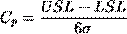 A capable process is one where almost all the measurements fall inside the specification limits. This can be represented pictorially by the plot below:   One problem with the Cp index is that it does not account for a process that is off-center. | |||||||||||||||
Cpk | Process Capability Index. Adjustment of Cp for the effect of non-centered distribution. A measure of the ability of a set of actions (process) to deliver a result within a specified range. Abbreviated as Cpk Cpk = Lesser of Cpu or Cpl where: Cpu = (upper Specification – Process Mean) / 3sigma Interpretation of the index is generally as follows: Cpk > 1.33 More than adequate Cpk < 1.33 but > 1.00 Adequate, but must be monitored as it approaches 1.00 Cpk < 1.00 but > 0.67 Not adequate for the job Cpk < 0.67 Totally inadequate ![Cpk = MIN[(USL-mu)/(3*sigma), (mu-LSL)/(3*sigma)]](https://i0.wp.com/resourcesystemsconsulting.com/wp-content/uploads/image030.gif?resize=243%2C38) “Cpk is an index (a simple number) which measures how close a process is running to its specification limits, relative to the natural variability of the process. The larger the index, the less likely it is that any item will be outside the specs.” | |||||||||||||||
Critical equipment | A piece of equipment that if it goes down it will shutdown the plant or stop production. | |||||||||||||||
CTC | Critical to Cost (CTC) characteristics are product, service, and/or transactional characteristics that significantly influence one or more CTSs in term of cost. | |||||||||||||||
CTD | Critical to Delivery (CTD) characteristics are product, service, and/or transactional characteristics that significantly influence one or more CTSs in term of delivery or cycle. | |||||||||||||||
CTP | Critical to the Process (CTP) characteristics are process parameters that significantly influence a CTQ, CTD, and/or CTC. | |||||||||||||||
CTQ | Critical to Quality (CTQ) characteristics are product, service, and/or transactional characteristics that significantly influence one or more CTSs in term of quality. | |||||||||||||||
CTS | Critical to Satisfaction (CTS) characteristics relate specially to the satisfaction of the customer. The customer will typically define satisfaction in one of three ways: CTQ, CTD and CTC. | |||||||||||||||
Cycle Counting | Cycle counting randomly checks inventory records vs. physical counts to determine the accuracy of the inventory records (usually electronic). Used as a less laborious method of correcting inventory records than the traditional annual physical inventory counting event. | |||||||||||||||
Cycle Time | The amount of time (clock time) for a product to travel through a process. Can be based on data: Cycle Time = average (Finish date – start date), or calculated: Cycle Time = Inventory / Throughput rate | |||||||||||||||
Days of Supply | The level of inventory within a plant (or warehouse or on a production line) expressed in terms of the consumption rate. DOS = Inventory (pieces) / Consumption Rate (pieces/day) | |||||||||||||||
Deduct Point | This is a variation of Back flushing. It is a calculation within MRPII that adjusts inventory levels in the database based on intermediate stages of the assembly or manufacturing process. Where backflushing nets out component usage for an entire assembly, Deduct point adjust inventories prior to completion of the finished unit. Deduct point is used instead of backflushing when the assembly cycle is long and the sensitivity to material consumption / resupply is high. | |||||||||||||||
Demand Segmentation | A graphical representation of the sales/consumption volume of products vs. demand variability. High volume low demand variability products are treated differently than low volume high demand variability. This technique is more informative than ABC or P-Q.  | |||||||||||||||
Demand Variability | A measure of the volatility of sales in the market place. Can be expressed as either:
| |||||||||||||||
W. Edwards Deming |  Pioneer in Quality Philosophy, W. Edwards Deming is widely held to have been one of the leaders who helped create the Total Quality Movement. Deming’s 14 points and his book “Out of the Crisis” are key documents in the development of Quality Systems for Business management. Dr. Deming is best known for his revolution in the quality and economic productions in Japan where from 1950 onward he taught top management and engineers, methods for management of quality. These teachings dramatically altered the economy of Japan. In recognition of his contributions the Union of Japanese Science and Engineering (JUSE) instituted the annual Deming prizes for achievement in quality and dependability of product. Pioneer in Quality Philosophy, W. Edwards Deming is widely held to have been one of the leaders who helped create the Total Quality Movement. Deming’s 14 points and his book “Out of the Crisis” are key documents in the development of Quality Systems for Business management. Dr. Deming is best known for his revolution in the quality and economic productions in Japan where from 1950 onward he taught top management and engineers, methods for management of quality. These teachings dramatically altered the economy of Japan. In recognition of his contributions the Union of Japanese Science and Engineering (JUSE) instituted the annual Deming prizes for achievement in quality and dependability of product. | |||||||||||||||
Deming Cycle | A problem Solving Methodology that when followed drives continuous Improvement. The four steps are: Plan: Determine how you’re going to make an improvement Do: Implement the change Check: Take data about the effect of your change Act: Take action based on the difference between what you wanted to achieve and what you actually achieved
| |||||||||||||||
Deming’s 14 Points for Management | 1.Create constancy of purpose toward improvement of product and service, with the aim to become competitive and to stay in business, and to provide jobs. 2.Adopt the new philosophy. We are in a new economic age. Western management must awaken to the challenge, must learn their responsibilities, and take on leadership for change. 3.Cease dependence on inspection to achieve quality. Eliminate the need for inspection on a mass basis by building quality into the product in the first place. 4.End the practice of awarding business on the basis of price tag. Instead, minimize total cost. Move toward a single supplier for any one item, on a long-term relationship of loyalty and trust. 5.Improve constantly and forever the system of production and service, to improve quality and productivity, and thus constantly decrease costs. 6.Institute training on the job. 7.Institute leadership. The aim of supervision should be to help people and machines and gadgets to do a better job. Supervision of management is in need of overhaul as well as supervision of production workers. 8.Drive out fear, so that everyone may work effectively for the company. 9.Break down barriers between departments. People in research, design, sales, and production must work as a team, to foresee problems of production and in use that may be encountered with the product or service. 10.Eliminate slogans, exhortations, and targets for the work force asking for zero defects and new levels of productivity. Such exhortations only create adversarial relationships, as the bulk of the causes of low quality and low productivity belong to the system and thus lie beyond the power of the work force. 11.Eliminate work standards (quotas) on the factory floor. Substitute leadership. Eliminate management by objective. Eliminate management by numbers, numerical goals. Substitute leadership. 12.Remove barriers that rob the hourly worker of his right to pride of workmanship. The responsibility of supervisors must be changed from sheer numbers to quality. Remove barriers that rob people in management and in engineering of their right to pride of workmanship. This means, inter alia, abolishment of the annual merit rating and of management by objective. 13.Institute a vigorous program of education and self-improvement. 14.Put everybody in the company to work to accomplish the transformation. The transformation is everybody’s job. | |||||||||||||||
Deployment Teams | Groups of people responsible for deploying Lean Enterprise. The group at the top is the “Steering Committee”; the group that does the analysis for improvement planning is the “Baseline Team” and the implementation teams are “Design Teams”.  | |||||||||||||||
Design for Manufacturability | A process for tailoring a product’s design to a specific manufacturing process. Characteristics considered:
| |||||||||||||||
DFSS | Design for Six Sigma The objective of DFSS is to determine the needs of customers and the business, and drive those needs into the product solution. For DFSS the basic thought process differs from DMAIC strategy. This thought process is called DMADV (define-measure-analyze-design-verify). Typically used when designing new products, services, processes, i.e. build in six sigma performance before implementing. | |||||||||||||||
Design Team | A cross functional group of people responsible for implementing a Lean project. | |||||||||||||||
Direct Worker | A person who “touches” the product and whose actions transform the product from one state to another. | |||||||||||||||
Discrete Manufacturing | A process for making product that is made up of several disconnected steps (i.e. the connection is based on routing or use of transport mechanisms). Transformation of the product takes place in “steps”. The steps are usually based on machines, operations, or stations in the manufacturing process. | |||||||||||||||
Division of Labor | Breaking work down into small discrete steps or operations so that a worker may specialize in a specific aspect of the production process. One of the key concepts of the industrial revolution. The key concepts:
| |||||||||||||||
DMAIC | Incremental process improvement methodology based on Deming’s PDCA cycle using Six Sigma methodology Define – Define the project goals and customer (internal and external) deliverables. Measure – Measure the process to determine current performance. Analyze – Analyze and determine the root cause(s) of the defects. Improve – Improve the process by eliminating defects. Control – Control future process performance. | |||||||||||||||
DMADV | DMADV approach is appropriate, instead of the DMAIC approach, when a product or a process is not in existence and one needs to be developed. Objectives of each DMADV step are: Define – Define the project goals and customer (internal and external) deliverables. Measure – Measure and determine customer needs and any specification requirements. Analyze – Analyze the options for the process of meeting customer needs. Design – Design the details needed to meet customer needs. Verify – Verify design performance and its ability to meet customer’s needs. | |||||||||||||||
Economical Order Quantity | The optimum number of parts to be run within one batch based on a tradeoff of the inventory carrying cost and the cost associated with a product changeover.
| |||||||||||||||
Economies of Scale | The idea that by maximizing volume costs are minimized. Procuring the maximum sized equipment and then running that equipment around the clock produce economies. Economies of scale created batch manufacturing when the number of product types to be run across a specific piece of equipment exceeds one. The concept of economical order quantity based on set-up costs grew out of the use of large-scale equipment. | |||||||||||||||
Efficiency (TPM – OEE) | Efficiency is one variable of the OEE calculation. •Percentage of how far from the optimum speed is the equipment running during the available hours. •Speed recommended by the machine manufacturer or spec speed (should not be average speed). It is impossible to be higher than 100%. = (600 000 units produced / 133 hrs x 100 units/min x 60 min/hr) x 100 = = (600 000 / 798 000) x 100 = 75.19% Efficiency | |||||||||||||||
Electronic Data Interchange | A process and set of standards for communicating requirements from purchasers to suppliers using computers and telecommunications equipment. The standards dictate data definitions, units of measure, fields used and field format. | |||||||||||||||
Entitlement | The level of performance a business should be able to achieve given the investments already made. | |||||||||||||||
Ergonomics | The application of scientific principles to the process of work: aimed at making work easier and less physically stressful. | |||||||||||||||
ERP | Enterprise Resource Planning is the combination of Manufacturing Resource Planning (MRPII) techniques with accounting information into a single database and data structure. The intent of ERP is to automate purchasing, inventory, production, accounting, shipping, receiving, billing, and invoicing into a single seamless database. | |||||||||||||||
External Set-up Activities | Tasks associated with switching a process from one product to another that can be done while the process is operating (i.e. preparing for the change). | |||||||||||||||
Finished Goods Inventory | Material that has completed the production process and is read for customer consumption but is waiting for an order. | |||||||||||||||
Flexible Work Cell | A group of machines or process (work cell) whose capacity is dictated by the staffing level of the cell. If requirements increase, increasing the number of workers will allow increased output; if requirements decrease, decreasing the number of workers will allow the cell to meet the requirements with no loss in efficiency. | |||||||||||||||
Floor Markings | A set of stripes or tapes that serve to segregate and visualize floor space requirements.  | |||||||||||||||
Floor Space Utilization Analysis | The process of capturing data associated with the amount of space used by a production process. The analysis requires data about machine / workstation space, inventory space, isle space, office space, etc. The analysis consists of comparing the minimum required value added space with the wasted space. | |||||||||||||||
Flow | The concept of transforming a product, step by step without stopping work at any time. Contrasts to traditional batch and queue operations where parts are made in discrete batches at work centers and then when the batch is completed, the batch is transported to the next operation. | |||||||||||||||
Flow Analysis | The process of collecting and dissecting data about a product’s path through the manufacturing process. Flow analysis typically entails:
| |||||||||||||||
Flow Charting | Laying out step by step, in a logical fashion the steps required to make a product. | |||||||||||||||
Flow Manufacturing | The application of the idea of “flow” to discrete manufacturing. Flow manufacturing mimics continuous production by combining a mixed stream of products, pulled through the process at a rate equal to daily customer demand requirements. Flow manufacturing concepts are typically associated with repetitive manufacturing of discrete products. | |||||||||||||||
FMEA | Failure Modes and Effects Analysis — used as a tool to plan for risk and adversity … the process seeks to determine failure points, prioritize their importance / likelihood and then design mitigation plans if those failures occur. | |||||||||||||||
Frederick Taylor |  Taylor, Frederick Winslow (1856-1915), American industrial engineer, who originated scientific management in business. He was born in Germantown (now part of Philadelphia), Pennsylvania. In 1878, he began working at the Midvale Steel Company. He became foreman of the steel plant and applied himself to studies in the measurement of industrial productivity. Taylor developed detailed systems intended to gain maximum efficiency from both workers and machines in the factory. These systems relied on time and motion studies, which help determine the best methods for performing a task in the least amount of time. In 1898 he became joint discoverer of the Taylor-White process, a method of tempering steel. Taylor served as consulting engineer for several companies. His management methods were published in The Principles of Management. Taylor, Frederick Winslow (1856-1915), American industrial engineer, who originated scientific management in business. He was born in Germantown (now part of Philadelphia), Pennsylvania. In 1878, he began working at the Midvale Steel Company. He became foreman of the steel plant and applied himself to studies in the measurement of industrial productivity. Taylor developed detailed systems intended to gain maximum efficiency from both workers and machines in the factory. These systems relied on time and motion studies, which help determine the best methods for performing a task in the least amount of time. In 1898 he became joint discoverer of the Taylor-White process, a method of tempering steel. Taylor served as consulting engineer for several companies. His management methods were published in The Principles of Management. | |||||||||||||||
Freeze Window | A period of time when production requirements are frozen. Freeze windows are employed to shield the production process from changes in demand within the cycle time of the production process. | |||||||||||||||
Full Work Analysis | The process of analyzing all activities associated with the production of a part, component, or unit. Worker activity, machine activity, and part activity are all analyzed using observation, stop watches and or video tape. | |||||||||||||||
Gage Repeatability & Reproducibility | An analysis method to determine the error introduced in the measuring process by: the gage itself, operators, and environmental changes. The components of the study are: Accuracy: how close is the measurement to the NBS standard. Repeatability: what is the variation introduced when a single operator repeatedly checks a part. Reproducibility: what is the variation introduced by the addition of other operators into the measurement process Stability: what is the variation introduced by changes in environmental conditions over time Linearity: is the gage linear over its operating range? | |||||||||||||||
GANTT Charts |  A project management tool that displays the time sequence and duration of specific elements of the Work Breakdown Structure. This chart also shows the status of each element of work (% complete) and the timeliness of each work element (slip). First developed by Henry Laurence Gantt in the 1920’s for building Hoover Dam. A project management tool that displays the time sequence and duration of specific elements of the Work Breakdown Structure. This chart also shows the status of each element of work (% complete) and the timeliness of each work element (slip). First developed by Henry Laurence Gantt in the 1920’s for building Hoover Dam. | |||||||||||||||
Gemba | Gemba is the location of reality, where processes and actual conditions exist and where the information about the process is most reliable. To ensure his supervisors experienced the reality of the workplace, Taiichi Ohno would draw a circle next to gemba and have the supervisor stand within the circle and study the process to gain awareness. When this level of awareness is achieved, continuous improvement (kaizen) can begin. Then, with practice, kaizen becomes a way of life for an organization. | |||||||||||||||
Dr. Eliyahu M. Goldratt |  Creator of Theory of Constraints which helps you to identify those resources which prevent your system from achieving higher performance levels. By focusing your attention on those factors which constrain your output, you can find solutions that boost total system performance instead of optimizing individual processes. Creator of Theory of Constraints which helps you to identify those resources which prevent your system from achieving higher performance levels. By focusing your attention on those factors which constrain your output, you can find solutions that boost total system performance instead of optimizing individual processes. | |||||||||||||||
Group Technology | The consolidation of certain process steps into geographically concentrated cells for the purpose of manufacturing a family of parts. The “group technology” is a set of machines in a fixed configuration that can complete a segment of the total manufacturing process. | |||||||||||||||
Hanedashi | Device or means for automatic removal of work piece from one operation or process that provides proper state and orientation for the next operation or process. In manufacturing a means for automatic unloading and orientation for the next operation or process. In manufacturing a means for automatic unloading and orientation for the next operation, generally a very simple device. Crucial for a “Chuku-Chuku” line. | |||||||||||||||
Health Maintenance Indicator | Readouts intended to monitor the status of equipment. These are to be checked by the operators to insure proper operation of the equipment. Examples: Air pressure gages, oil pressure gages, fluid level indicators, temperature gages, etc. | |||||||||||||||
Hejunka Box | A method of distributing customer orders for a specific cell so that the load on the cell is constant over time even though the workload associated with different parts made in that cell may not be the same. This is a load smoothing mechanism.  | |||||||||||||||
Henry Ford | Father of “mass” production, Henry Ford applied the principles of the assembly line, division of labor and waste reduction to the manufacture of automobiles. Ford motor company became the largest manufacturing company in the world in 15 short years. | |||||||||||||||
Hensei | Roughly translated means “reflection’. Toyota leaders view hensei as driving kaizen, the deep desire for continual improvement with an eye toward ultimate perfection. So when a Japanese manager finds a weakness in a project or process the engineer is expected to take it constructively as an opportunity for improvement. Related to US Military After Action Review and the C in PDCA. | |||||||||||||||
Hoshin Kanri | The Japanese word for policy deployment. In Japanese, Hoshin means “shining metal”, “compass” or “pointing in the direction”. Kanri means “control”. Hoshin Kanri is a method devised to capture and coordinate strategic goals as well as flashes of insight about the future and develop the means to bring these into reality. It is one of the major systems that make World Class Quality Management possible. It helps control the direction of the company by orchestrating change within a company. The system includes tools for continuous improvement, breakthroughs, and implementation. The key to hoshin planning is that it brings the total organization into the strategic planning process; both top down and bottom up. It ensures that the direction, goals, and objectives of the company are rationally developed, well defined, clearly communicated, monitored, and adapted based on system feedback. It provides focus for the organization. | |||||||||||||||
Indirect Worker | A person who is involved in the manufacture of product but does not directly participate in the transformation of that product. Indirect workers may either be doing physical work (receiving, shipping, moving) or may be doing knowledge work (supervising, scheduling, engineering, etc.). | |||||||||||||||
Internal Set-up Activities | Tasks associated with switching a process from one product to another that can only be performed with the process stopped. | |||||||||||||||
Inventory | All goods, which have been or are going to be worked on to produce products for customer consumption. There are 3 basic categories or inventory: Raw: material sent by suppliers but not yet worked on by internal personnel. In Process: raw material which has had some value added (it has been through some transformational steps) Finished Goods: products completed and on the shelf, waiting customer orders Inventory = Throughput Rate x Cycle Time (Little’s Law) | |||||||||||||||
Inventory Mapping | The process of pictorially representing the location of inventory within a plant. Representation may be based on either $ / location or pieces/location. The intent of the map is to help the analyst pinpoint bottlenecks. | |||||||||||||||
Inventory Turns | A measure of the capital efficiency of an operation. One turn equals to the complete consumption and replenishment of the inventory in question. The number of inventory turns is usually based on a calendar year. Inventory Turns = 365 / Inventory Days of Supply = 365 / Inventory $/ Daily Sales $ = Throughput Rate / Inventory | |||||||||||||||
Kaoru Ishikawa |
| |||||||||||||||
Jidoka | Automation with a human touch or mind, Autonomation. Automatic machinery that will operate by itself but always incorporates the following devices: a mechanism to detect abnormalities or defects, and a mechanism to stop the machine or line when defects or abnormalities occur. | |||||||||||||||
Just-in-Time | A manufacturing philosophy that seeks to make exactly what is needed, when it is needed in the current quantity with no waste. Just in time is made up of various tactics:
The groundwork for JIT was based on work by Kiichiro Toyoda who studied Henry Ford’s methods and tried to adapt them to small lot production. | |||||||||||||||
Kaizen | Process improvement that involves a series of continual improvements over time. These improvements may take the form of a process innovation (event) or small incremental improvements. | |||||||||||||||
Kanban | Japanese term that means card signal. Kanban is the information signal used to indicate the need for material replenishment in a pull production process.  | |||||||||||||||
Kano Model | Dr Noriaki Kano is a Japanese quality expert who is best known for his excellent “Kano model”. The Kano Model has emerged as one the most useful and powerful aids to product and service design and improvement available. It’s included here because of its relevance to QFD, the design process and R&D.  The Kano model relates three factors (which Kano argues are present in every product or service) to their degree of implementation or level of implementation, as shown in the diagram. Kano’s three factors are Basic (or “must be”) factors, Performance (or “more is better”) factors, and Delighter (or “excitement”) factors. The degree of customer satisfaction ranges from “disgust”, through neutrality, to “delight”. The Kano model relates three factors (which Kano argues are present in every product or service) to their degree of implementation or level of implementation, as shown in the diagram. Kano’s three factors are Basic (or “must be”) factors, Performance (or “more is better”) factors, and Delighter (or “excitement”) factors. The degree of customer satisfaction ranges from “disgust”, through neutrality, to “delight”. | |||||||||||||||
Kepner-Tregoe | The Kepner-Tregoe is a special, well-orchestrated, synchronized and documented Root Cause analysis and decision-making method. Kepner-Tregoe describes the following steps to approach decision analysis:
| |||||||||||||||
Kiichiro Toyoda | President of the start-up Toyota Motor Company who is credited with inventing the Just-in-time concept. Toyoda, upon observing the awesome efficiency of Ford’s automotive plants decided to apply Ford’s principles to “small lot production” i.e. make many types of cars on one assembly line. | |||||||||||||||
L shaped Line | A configuration of production stations or machines shaped like an L. Goods flow counter clockwise; workers on the inside of the L; component parts fed from outside the L. | |||||||||||||||
Lead Time | The time to manufacture and deliver a product or service. This term is used in many (often contradictory) contexts. To avoid confusion, lead-time is defined as the average total lapse time for execution of the product delivery process from order receipt to delivery to the customer under normal operating conditions. In industries that operate in a build to order environment, lead times flex based on the influences of seasonal demand loads. In environments where production is scheduled in repeating, fixed-time segments, or cycles, the lead-time is usually determined by the length of the production cycle (i.e., days, weeks, months, etc.). | |||||||||||||||
Lean Principles | A group of 5 philosophical principles upon which lean production systems are built: 1) Specify value in the eyes of the customer 2) Identify value stream and eliminate waste 3) Make work flow at pull of the customer 4) Involve & Empower Employees 5) Continuously improve in pursuit of perfection | |||||||||||||||
Lean Production | The activity of creating processes which are highly responsive and flexible to customer demand requirements. Successful lean production is evident when processes are capable of consistently delivering the highest quality products and services, at the right location, at the right time, in response to customer demand and doing this in the most cost effective manner possible. The central concept in Lean Production is the elimination of waste. | |||||||||||||||
Line Balancing | The process of deploying work evenly amongst workstations and workers within a cell. Work time at each operation should be equal to the cell’s Takt Time. | |||||||||||||||
Line Capacity | The maximum output of a given set of operations based on the rate determining step or pacing operation. The capacity may be determined by machine speed, operator speed, set-up/changeover time, or operation yield. | |||||||||||||||
Line Configuration | The orientation of machines and/or workstations to each other. There are several standard line configurations: Pod / Workstation, L shaped, U Shaped, Straight Line, Combi Line. | |||||||||||||||
Line of Balance | A scheduling method that nets out demand and production over time. The “line of balance” is typically a spreadsheet where weekly production is subtracted from bucketed demand to give a “remainder” which is due next week. The shop works off of the balance due. | |||||||||||||||
Line Stop | An operating policy that allows workers to halt a production line if a quality problem is observed and cannot be corrected within a takt time. Several levels of line stop are documented by Andon light colors. Standard color codes are listed below.
| |||||||||||||||
Load Chart | A graph depicting the workload associated with various workers, workstations, or machines.
| |||||||||||||||
Machine Capacity | A measure of a process or machine’s ability to make product. Simple capacity is determined by the ratio of available time to part-machine cycle time. Expressed as units / hr, day, month, etc. A more robust capacity calculation involves set-up and maintenance down time. | |||||||||||||||
Make/Buy Analysis | The process of determining which parts/ processes will be kept in house and which will be farmed out to vendors. Usually based on competency analysis, the availability of capital, and the “fit” of the products into product families (i.e. planned work cells) | |||||||||||||||
Management Audit | A set of metrics and observations about a production process which will indicate the health of the process, the degree of lean production principles implemented and the effectiveness of local management. | |||||||||||||||
Manufacturing Instructions | A detailed procedure defining the steps and tasks associated with an operation. MI’s usually contain text & sketches or prints. | |||||||||||||||
Manufacturing Resources Planning | A second generation MRP system that provides additional control linkages such as automatic purchase order generation, capacity planning, and accounts payable transactions and shop floor control modules. | |||||||||||||||
Maslow’s Needs Hierarchy | In 1943, Maslow published his influential paper: ‘A theory of human motivation’ (Psychological Review 50, pp.370-396). In this paper, he presents a hierarchy of needs that act as motivators. As long as a more basic need is not satisfied, ‘higher’ needs can’t act as motivators. The subsequent levels of needs or drives is given by Maslow as follows: | |||||||||||||||
Master Schedule | A macro listing of end items to be produced by a facility within a given time period. Usually performed monthly. The master schedule serves as a basis for: capacity planning, material requirements planning and shop floor control (detailed scheduling). | |||||||||||||||
Material System | The sum total of all policies, procedures, people, computers, computer programs, forms, decisions, and outcomes related to the flow of goods and services thorough a business. | |||||||||||||||
Materials Requirements Planning | A computerized information system that calculates materials requirements based on a master production schedule. This system may be used only for materials procurement or to also execute the material plan through shop floor control. | |||||||||||||||
Mean Time Between Failure (MTBR) | •Average time (min, hrs, days) between breakdown or stoppages of the equipment. Use as TPM metrics. •Calculate: –Sum of the breakdown time divided by the number of breakdown –MTBF = ∑ of the operating time / ∑ of the number of breakdown | |||||||||||||||
Mean Time To Repair (MTTR) | •Average time (min, hrs, days) to repair a breakdown equipment. Use as TPM metrics. •Calculate: –Sum of the breakdown time divided by the number of breakdown –MMTR = ∑ of breakdown time / ∑ of the number of breakdown | |||||||||||||||
Maintenance | Any activity, such as tests, measurements, replacements, adjustments and repairs, intended to restore or retain a functional unit in a specified state in which the unit can perform its required functions | |||||||||||||||
Message Mapping | A process used to improving the effectiveness of a communication. This process breaks communication objectives down and relates the objectives to delivery tactics. | |||||||||||||||
Metric Boards | Cell based documentation of the status of that cell’s performance. Key items included on the board: Schedule and performance to that schedule, Process Yield Results, Machine Downtime, Attendance, Multi-skilling matrix, Kaizen Newspaper – action items for improvement. | |||||||||||||||
Metrics | Measures collected which determine the health of a production process. Typical metrics include:
| |||||||||||||||
Milk Run | A standard “path” around a factory, or around a loop of suppliers that happens on a defined schedule and sequence. The intent of the run is to pick-up and drop off materials. The milk run precludes the need to schedule point-to-point transportation and improves transportation economies by aggregating different “supplies” within a single vehicle. | |||||||||||||||
Mistake Proofing | A method of designing processes, either production or administrative, which will by their nature prevent errors. This may involve designing fixtures that will not accept a defective part or something as simple as having a credit memo be a different color than a debit memo. It requires that thought be put into the design of any system to anticipate what can go wrong and build in measures to prevent them.  | |||||||||||||||
Mixed Model Production | Making different products on the same production line. The different products may require different resources, set-ups, and labor content. Mixed model production smooths out the resource consumption by alternating products to smooth the load. Mixed model differs from traditional “batch” production by alternating models on a fairly short cycle. In “batch” many models may share the line but, only one model will be run at a time. In mixed model, changeover times must be less than takt time. | |||||||||||||||
Mixed Model Sequence | The optimum pattern for running different products down a production line. The Mixed model sequence defines the pattern and ratio of products that minimizes the changeover difficulties, levels the workload, and balances the flow. | |||||||||||||||
Model Line | Usually the first and most important implementation of cellular manufacturing in a facility. The model is selected based on the following criteria:
| |||||||||||||||
Monument | A large, immovable production machine or process that forces batching and queuing to optimize its efficiency. | |||||||||||||||
Monument Planning Matrix | A strategic decision process that outlines how you plan to deal with specific “monuments” in the move to cellular manufacturing. Specific options include:
| |||||||||||||||
Muda, the 7 Wastes | Japanese for ‘waste’. Taiichi Ohno of Toyota Motor Co. identified 7 forms of wasted time, effort or materials all of which lead to inefficiency in the production process. Eliminating these waste is at the core of the lean transformation:
| |||||||||||||||
Multi-Cycle Analysis | A process of analyzing the variability of performing a task. Sources of variability to be captured include:
| |||||||||||||||
Multi-process Operators | Operators who float between machines and processes to where the work is in a smooth predictable walk pattern. Requires multi-skilled operators and autonomous machines.  | |||||||||||||||
Multi-skilling | Operators being able to perform more than one type of task or operation. Also called Cross-training. | |||||||||||||||
Need Date | The date that the customer requires a product to be delivered. | |||||||||||||||
Nonflexible Work Cell | A cell whose capacity is not improved by the addition of workers, its capacity is determined by machine based parameters. | |||||||||||||||
NPD | NPD – New Product Development | |||||||||||||||
Oasis | An area set-aside for work group team meetings and management. Usually located close to the production line, these rooms contain meeting space, information board, project “war room” storyboards, lockers, etc.  | |||||||||||||||
OEE (TPM) | The primary measure of performance in TPM is Overall Equipment effectiveness (OEE). A powerful component of the TPM process, OEE clearly indicates implementation progress and equipment performance. Measures the global performance of the equipment while being utilized during a defined period of time,It combines three (3) major process performance indicators OEE = Availability x Efficiency x Quality
| |||||||||||||||
Taiichi Ohno |  The father and chief architect of the Toyota Production System. Ohno was a plant manager of a Toyota factory when he integrated the Just-in-time concepts of Kiichiro Toyoda with the Set-up reduction techniques of Shingo and the ideas associated with supermarket replenishment to form the basic elements of the Toyota Production System. Ohno later became Executive Vice President of Toyota. The father and chief architect of the Toyota Production System. Ohno was a plant manager of a Toyota factory when he integrated the Just-in-time concepts of Kiichiro Toyoda with the Set-up reduction techniques of Shingo and the ideas associated with supermarket replenishment to form the basic elements of the Toyota Production System. Ohno later became Executive Vice President of Toyota. | |||||||||||||||
One Touch | An arrangement whereby the change over from the production of one product to another can be accomplished by the push of a button (instantaneously). | |||||||||||||||
Operation | A series of tasks grouped together such that the sum of the individual task times is equal to the takt time (cycle time to meet product demand requirements). It is important to distinguish between operations and activities. Operations are used to balance work content in a flow manufacturing process in order to achieve a particular daily output rate equal to customer demand. An operation defines the amount of work content performed by each operator in order to achieve a balanced flow and linear output rate. | |||||||||||||||
Operator | A person who is skilled in performing a set of tasks related to the production process. Performs “touch” labor. | |||||||||||||||
Operator Observation Form | Used to document and categorize the tasks performed by operators in doing their jobs.
| |||||||||||||||
Order Point | A system for controlling stock room inventory based on consumption and supplier replenishment time. Loosely related to Kanban. Order point = Average daily demand * (replenishment time + safety lead time) | |||||||||||||||
Organizational Design | A process for transforming the “human” system associated with manufacturing. Organizational design creates organizational structure (reporting relationships), roles & responsibilities, rewards & recognition, hiring, firing & discipline procedures based on: Environmental factors Business strategy Cultural issues Technical & Knowledge systems design | |||||||||||||||
Overall Equipment Effectiveness (see OEE) | A measure of the performance of a machine relative to its intended design performance. Detracting from optimum performance are: Machine Down Time Below-spec feeds and speeds Process Yield Non-staffed time | |||||||||||||||
P.E.R.T. Charts | Program evaluation and review technique (PERT) charts depict task, duration, and dependency information. Each chart starts with an initiation node from which the first task, or tasks, originates. If multiple tasks begin at the same time, they are all started from the node or branch, or fork out from the starting point. Each task is represented by a line which states its name or other identifier, its duration, the number of people assigned to it, and in some cases the initials of the personnel assigned. The other end of the task line is terminated by another node which identifies the start of another task, or the beginning of any slack time, that is, waiting time between tasks. | |||||||||||||||
Pareto graph | A Graphical technique used to quantity problems so that effort can be expended in fixing the “vital few” causes, as opposed to the “trivial many.” | |||||||||||||||
Vilfredo Pareto |  In the late 1800s, economist and avid gardener Vilfredo Pareto established that 80% of the land in Italy was owned by 20% of the population. While gardening he later observed that 20% of the pea pods in his garden yielded 80% of the peas that were harvested. And thus was born a theory that has stood the test of time and scrutiny. The Pareto Principle or the 80:20 Rule has proven its validity in a number of other areas. In the late 1800s, economist and avid gardener Vilfredo Pareto established that 80% of the land in Italy was owned by 20% of the population. While gardening he later observed that 20% of the pea pods in his garden yielded 80% of the peas that were harvested. And thus was born a theory that has stood the test of time and scrutiny. The Pareto Principle or the 80:20 Rule has proven its validity in a number of other areas. | |||||||||||||||
Part Family | A group of parts, components or assemblies which follow a common process and can therefore be run on a single production line | |||||||||||||||
Part Production Capacity | A form used to document the time associated with individual process steps associated with the manufacture of a unit | |||||||||||||||
PDCA | A problem Solving Methodology that (if followed) drives continuous Improvement. The four steps are: Plan: Determine how you’re going to make an improvement Do: Implement the change Check: Take data about the effect of your change Act: Tack action based on the difference between what you wanted to achieve and what you actually achieved | |||||||||||||||
Peak Demand | The maximum output required for a process within the planning horizon. | |||||||||||||||
Peg Boards | Tool storage tactic which lays tools out in simple, visual, organized fashion. | |||||||||||||||
PF/CE/CNX/SOP | Do the right thing, do the right thing right, do the right thing right the first time PF: Process flow CE: Cause & Effect CNX : Constants, Noise, eXperimental SOP : Standard Operating Procedures | |||||||||||||||
Pie Chart | Graphical representation of data using the pie chart | |||||||||||||||
Pipeline Chart | A graphical display of the capacity of linked operations intended to highlight the constraint of the process and visualize the productive potential of that process. | |||||||||||||||
Planned Maintenance | Planned maintenance: Scheduled corrective, preventive or predictive activities. All plant maintenance is scheduled with a maintenance calendar. | |||||||||||||||
Planned Waste | Tasks that must be performed in the current production process which add no value and consume resources. Planned waste is designed into the production process and cannot be eliminated without process redesign. Examples of planned waste are:
| |||||||||||||||
Plant Capacity | The ability of a set of machines, people and processes to deliver units of output within a given period of time. Expressed as: ·$ / time ·units / time ·Standard hours earned / time | |||||||||||||||
Point of Sale | The instance where goods are exchanged for cash. Usually at a checkout stand of a market or store. Point of Sale data records exact purchase patterns of consumers and can be useful in leaning out manufacturing and distribution. | |||||||||||||||
Point of Use Inventory | Storage of raw and in process inventory at a location that is in the proper place for efficient use. Point of use is basically on line or in cell storage. The degree of POU is limited by the configuration of the cell/line and the replenishment time associated with the feeding process/supplier. | |||||||||||||||
Point Velocity | The speed of a given step or operation in manufacturing. Point velocity has little impact on total cycle time since most of the time in the cycle is wait time. | |||||||||||||||
Poka-Yoke | Japanese expression meaning “common or simple, mistake proof”. A method of designing processes, either production or administrative, which will by their nature prevent errors. This may involve designing fixtures that will not accept a defective part or something as simple as having a credit memo be a different color than a debit memo. It requires that thought be put into the design of any system to anticipate what can go wrong and build in measures to prevent them. | |||||||||||||||
Policy Deployment | Policy Deployment orchestrates continuous improvement in a way that fosters individual initiative and alignment. It is a process of implementing the policies of an organization directly through line managers and indirectly through cross-functional organization. It is a means of internalizing company policies throughout the organization, from highest to lowest level. Top managers will articulate its annual goals that are then “deployed” down through lower levels of management. The abstract goals of top management become more concrete and specific as they are deployed down through the organization. Policy deployment is process oriented. It is concerned with developing a process by which results become predictable. If the goal is not realized, it is necessary to review and see if the implementation was faulty. It is most important to determine what went wrong in the process that prevented the goal from being realized. | |||||||||||||||
Predictive Maintenance | Performing maintenance activities on machines based on several predictive measures:
Predictive maintenance (PdM) is the periodic measurement and trending of process or maintenance parameters with the aim of predicting failures before they occur. | |||||||||||||||
Pre-Production Kaizen | A process used to plan the transition of a product from design to manufacturing. This process seeks to eliminate waste caused by misunderstanding, poor alignment of capability with requirements and poor communication. | |||||||||||||||
Preventative Maintenance | Performing routine maintenance on machinery based on fixed schedules related to either clock or run time or both. Preventive maintenance (PM) activities are designed to prevent equipment failures and ensure reliability. PM tasks are performed at predetermined periods with established methods, tools, equipment, and time estimates. | |||||||||||||||
Process | A series of activities that collectively accomplish a distinct objective. Processes are cross-functional and cut across departmental responsibility boundaries. | |||||||||||||||
Process Capability | The measured, inherent reproducibility of the product turned out by a process. The most widely adopted formula for process capability (Cp) is: Process Capability (Cp) = 6 sigma = Total Tolerance/6 sigma where sigma = the standard deviation of the process under a state of statistical control. | |||||||||||||||
Process Capability Index | A measure of the ability of a set of actions (process) to deliver a result within a specified range. Abbreviated as CPK Cpk = Lesser of Cpu or Cpl where: Cpu = (upper Specification – Process Mean) / 3sigma and: Cpl = (process Mean – Lower Specification) / 3sigma Interpretation of the index is generally as follows: Cpk > 1.33 More than adequate Cpk < 1.33 but > 1.00 Adequate, but must be monitored as it approaches 1.00 Cpk < 1.00 but > 0.67 Not adequate for the job Cpk < 0.67 Totally inadequate | |||||||||||||||
Process Capacity Table | An analysis of the time associated with each step of the production process. | |||||||||||||||
Process Hierarchy | A hierarchical decomposition from core business processes to the task level. The number of levels in a hierarchy is determined by the breadth and size of the organization. A large enterprise process hierarchy may include: Core Business Processes, Processes, Sub-Processes, Process Segments, Activities, and Tasks. | |||||||||||||||
Process Observation Form | A document used to trace the activity of the product from raw material to finished good, categorizes tasks based on waste elimination potential. | |||||||||||||||
Process Segment | A series of activities that define a subset of a process. Process segments may be implemented in assembly lines or manufacturing cells. | |||||||||||||||
Product Delivery Process | The stream of activities required to produce a product or service. This activity stream encompasses both planning and execution activities to include demand planning, order management, materials procurement, production and distribution. | |||||||||||||||
Product Family | A group of parts, models, or products that have similar technical and manufacturing requirements and may be manufactured on a single “line”. | |||||||||||||||
Product Family Turnover Rate | The amount of time required to run all products within a product family through a given production process (i.e. cell). Product Family Turnover Rate is based on machine capacity and can be used to calculate batch sizes. PFTR = Total available time / (Total Run time + Total Changeover Time) Available Time = staffed time * OEE Total Run Time = Sum of Part Run Times Part Run Times = Single Part Run Time * # Required Total Changeover Time = Sum of Part Changeover Times | |||||||||||||||
Product Process Matrix | A form used to display the intersection of parts and processes for the purpose of grouping products into manageable manufacturing cells. | |||||||||||||||
Production Kanban | A visual signal used to initiate the production process. The number of cards is calculated by: # cards = (average daily demand * (replenishment time +safety)) # of pieces in a container | |||||||||||||||
Production Smoothing | A process of managing top-level demand (through the master production schedule) that results in lower demand variability. Production smoothing involves a trade off between capacity and short-term customer requirements. | |||||||||||||||
Project Management | A set of disciplines intended to turn the management of non-repetitive activities into a science. First developed by NASA for the Apollo Program. Key concepts: WBS – work breakdown structure; a hierarchical breakdown of the deliverables RBS – resource breakdown structure; a breakdown of the skill groups impacting the deliverables OBS – organizational breakdown structure; the assignment of resources to management units PERT – an activity network defining interrelationships GANTT – a bar graph showing sequence of activities & progress | |||||||||||||||
Project Scheduling | A methodology for managing product development that involves a combination of management disciplines (phase gates), deliverables deconstruction (WBS), and reports (Gantt, PERT, Resource) to maximize delivery performance while minimizing cost. Generally done around a piece of software, i.e. MS Project. | |||||||||||||||
Promise Date | The date committed by a production operation for delivery of product to a customer. | |||||||||||||||
Pull | A replenishment approach to production. Customers take product from finished goods stock that signals the proceeding operation to make a replacement. Taiichi Ohno first recognized the pull system on a visit to the US. Ohno was fascinated by the efficiency and responsiveness of US supermarkets. Ohno took the concept back to Toyota and used it, along with Kanban to create a very fast, responsive, and low inventory production process that we now call the Toyota Production System. | |||||||||||||||
Pull Production | In a pull process, materials are staged at the point of consumption. As these materials are consumed, signals are sent back to previous steps in the production process to pull forward sufficient materials to replenish only those materials that have been consumed. | |||||||||||||||
Pure Waste | Activities that do not contribute anything to the fulfillment of customer requirements. Such activities not only do not add value but also may subtract value from the value delivery process. Examples of Pure Waste Include: Redundant paperwork and data recording Scrap and rework Idle time Material made that can’t be sold | |||||||||||||||
Push Production | A system of production that creates output by controlling input. In a push system, orders (either real or forecast) are fed into the system offset by a predicted lead-time. Those orders are “pushed” into the system and their processing is managed by operation-by-operation scheduling. Orders tend to pile up in front of operations and are worked through each operation via a priority list. | |||||||||||||||
PUTC | A methodology for spreading Learning – plan, use, teach, coach. | |||||||||||||||
Quality Function Deployment | A method of translating customer requirements into technical specifications (relates performance to characteristics or attributes) and then sets performance precedence. Primarily used in product development. | |||||||||||||||
Queue | A pile of material waiting to be processed. | |||||||||||||||
Rate-Based Order Management | This order management system employs a finite capacity loading scheme to promise orders based upon the agreed demand bound limits. These minimum and maximum demand bounds reflect potential response capacity limits for production and materials procurement. | |||||||||||||||
Rate-Based Planning | A procedure that establishes a controlled level of flexibility in the product delivery process in order to be robust to anticipated variations in demand. This flexibility is achieved by establishing minimum and maximum bounds around future demand forecasts. The idea is that both the production facility and the materials supply channels will reserve sufficient capacity to accommodate demand swings that do not exceed the established demand bounds. As future demand forecasts move closer to the production window, updated demand bounds are periodically broadcast to the materials suppliers. At the point of order, receipt, delivery promising, demand bounding limits are enforced to insure the rate-based production plan remains feasible. | |||||||||||||||
Raw Material | Goods supplied by vendors that have not been transformed (worked on) by internal personnel. | |||||||||||||||
RCM (Reliability Centered Maintenance) | Reliability centered maintenance is a rigorous method based on technical optimization follow-up with an economical analysis that drive the optimal maintenance plan | |||||||||||||||
Replenishment Buffer | The level of stock required to support instantaneous customer demand (at the end of the production process) for all products simultaneously. | |||||||||||||||
Required Date | The date at which a customer expects delivery of goods from a producer. | |||||||||||||||
Response surface methodology (RSM) | Response surface methodology (RSM) is used to determine how a response is affected by a set of quantitative variables/factors over some specified region. This included central composite designs, Box-Behnken designs, Mixture designs etc… | |||||||||||||||
Rolled -Throughput Yield | The geometric sum of the yields of operations linked in a process. (RTY) | |||||||||||||||
Routing Sheet | A list of the sequence of operations to be performed on a product or part. | |||||||||||||||
S.M.E.D. Method | A step-by-step method for reducing the time to change a production process from one product to another stands for Single Minute Exchange of Dies (single minute meaning single digit, i.e. less than 10 minutes). Approach pioneered by Shigeo Shingo and described in his book “A Revolution in Manufacturing: The SMED System”. | |||||||||||||||
Safety Factor | A multiplier applied to calculated stock requirements designed to absorb uncertainties in the production system. Uncertainties may be related to demand variability, scrap/rework, machine downtime, parts shortages, etc. Safety factors are used in Kanban calculations and provide a buffer against running out of material. Typical safety factors are 30% (or 1.3). Safety factors may be thought of as a percentage of inventory or a number of additional days of supply (DOS) kept. | |||||||||||||||
Safety Stock | Material kept on hand used to buffer variation: demand, production, quality. | |||||||||||||||
Sakichi Toyoda | President of the Toyota Group at the turn of the century invented Jidoka (Autonomation), which allowed him to separate people from machines by having the machines stop production when they detected anomalies. Technique first applied to weaving looms in 1902 where a machine would automatically stop when a broken thread was detected. | |||||||||||||||
Sales & Operating Plan | The highest level production planning tool which seeks to reconcile business plans with production and capacity plans. Typically managed by the Production Control Organization and reviewed at a monthly planning meeting. | |||||||||||||||
Semi-automated | Machines that are able to complete some value added without human effort. Typically any numerically controlled machine is semi-automated. | |||||||||||||||
Service Buffer | The level of stock required (at the en of the production process) required to support the service policy, based on the variation in average daily demand | |||||||||||||||
Service Level | The (statistical) likelihood that a costumer will get their required goods when wanted. Expressed as a % of the time that the customer will be “satisfied” with delivery of the product. Service levels (fill rates) are can be calculated based on demand variability (standard deviation (sigma) and shall be calculated as follows: ADD + 1 sigma (ADD) = 65 % service level ADD + 2 sigma = 95 % ADD + 3 sigma = 99 % | |||||||||||||||
Service Policy | A management decision about the acceptable level of response to customer demand. The “service level” describes the likelihood that the producer will supply the customer a specific product on a specific date. The service policy includes standard lead-time and “acceptable” fill rate to customer need or promise dates. Service policy should be described in probabilistic terms. | |||||||||||||||
Set-up Reduction | A process (usually performed by a cross-functional group) for minimizing the time required to switch a process from one product to another. Involves several simple principles:
| |||||||||||||||
Shigeo Shingo | Father of Set-up Reduction, Shingo was an industrial engineering consultant in Japan who, under contract to Toyota (Taiichi Ohno) developed a methodology for reducing the time associated with switching a process from producing one product to another in a minimum time. Shingo’s “Single Minute Exchange of Dies” methodology details a process to reduce changeover from hours to less than 10 minutes. His book: “A Revolution in Manufacturing: The SMED system” documents his work. | |||||||||||||||
Dr. Walter Shewhart |  Dr. Shewhart was a prominent scientist with the Western Electric Engineering Department back in the 1920s. In 1924, Dr. Shewhart devised a framework for the first application of the statistical method to the problem of quality control. Shewhart wrote a note to R.L. Jones, responding to his request for some type of inspection report that “might be modified from time to time, in order to give a glance at the greatest amount of accurate information.” He attached a sample chart “designed to indicate whether or not the observed variations in the percent of defective apparatus of a given type are significant; that is, to indicate whether or not the product is satisfactory.” Dr. Shewhart was a prominent scientist with the Western Electric Engineering Department back in the 1920s. In 1924, Dr. Shewhart devised a framework for the first application of the statistical method to the problem of quality control. Shewhart wrote a note to R.L. Jones, responding to his request for some type of inspection report that “might be modified from time to time, in order to give a glance at the greatest amount of accurate information.” He attached a sample chart “designed to indicate whether or not the observed variations in the percent of defective apparatus of a given type are significant; that is, to indicate whether or not the product is satisfactory.”Shewhart’s example was the world’s first schematic control chart. In one short letter, he had set forth the essential principles and considerations of quality control. As he pursued this work, Shewart gave birth to the modern scientific study of statistical process control. In 1931, Shewhart’s book ‘Economic Control of Quality of Manufactured Product’ contained his findings on statistical sampling techniques. A Western Electric colleague, W. Edwards Deming, spread the word on Shewhart’s work when he joined the US War Department, and later when he taught the fundamentals of quality in Japan. | |||||||||||||||
Simulation | The activity of modeling (usually mathematically) a set of events or processes for the purpose of predicting results given a set of parameters and variables. | |||||||||||||||
SIPOC | A SIPOC diagram is a tool used by a team to identify all relevant elements of a process improvement project before work begins. It helps define a complex project that may not be well scoped, and is typically employed at the Measure phase of the Six Sigma DMAIC methodology. The tool name prompts the team to consider the Suppliers of your process, the Inputs to the process, the Process your team is improving, the Outputs of the process, and the Customers that receive the process outputs. | |||||||||||||||
Six Sigma | A process improvement methodology based on statistical analysis of the production process. Sigma is the symbol for standard deviation and Six Sigma therefore refers to the condition where control limits are at least six standard deviations apart (i.e. plus or minus three standard deviations from the mean). This equates to 3.4 parts per million defect rate. Six Sigma was developed by Motorola in the 1980s but has since been widely adopted, notably by General Electric in the US. The term has come to include not only the narrow definition above but a wide range of associated tools and techniques such as SPC, FMEA and APQP. Six Sigma philosophies focus on a quantitative analysis of defects and identification of the opportunity for defects to occur, in processes as well as products. Within GE, the technique has been applied widely in financial, sales and back-office functions as well as production areas. | |||||||||||||||
Socio-Technical Systems Design | An approach to structuring a business and work activities based on a parallel analysis of both human and engineering issues. The outcome of the design process is a process design, job requirements, personnel policies, organization design, and a transition plan. | |||||||||||||||
Source Quality Control | The process of ensuring characteristic compliance (with requirements) at the point where the characteristic is generated. Source quality control verifies quality at the source of production thus reducing the feedback loop (time) and minimizing end of line inspection (rejects/rework). | |||||||||||||||
Spaghetti Chart | A pictorial representation of the path a product follows through a production process. | |||||||||||||||
Standard Costing | A method of determining the resources ($) required to produce a unit of production. Pioneered by GM in the 1920’s and 30’s so that its management could make decisions about which models to produce, the standard cost system bases the “cost” of a product on the number of hours of direct labor applied to that product. Non-direct activities are lumped in an overhead pool and then allocated based on ratios of direct labor to products produced in the analysis period. | |||||||||||||||
Standard Deviation | A statistical measure of variation based on the normal distribution curve. | |||||||||||||||
Standard Operating Procedure | Documented procedures for performing a function or set of functions. May be based on policy or technical requirements. | |||||||||||||||
Standard Operations Routine | A description of the “best” way to perform a value delivery task; documents the best combination of worker and equipment for the delivery of value, includes work pattern sketch. | |||||||||||||||
Standard Work | A tool that defines the interaction of man and his environment when processing something. It details the motion of the operator and the sequence of action. It provides a routine for consistency of an operation and a basis for improvement. Further, the concept of standard work is that it is a verb, not a noun. It details the best process currently known and understood. Standard Work is the basis for continuous improvement since there can be no improvement without there first being stability (controlled process) 3 Types of Forms: Standard Operations Routine, Process Capacity Tables, Standard Work Combination Sheets | |||||||||||||||
Standard Work Combination Sheet | A graphical representation of the interaction of an operator, process operations, and machines over time. Represents one “cycle” for the operator. | |||||||||||||||
Standard Work In Process | The amount of material or a given product that must be in process at any time to insure maximum efficiency of the operation. SWIP is a constant given a specific production process. | |||||||||||||||
STAR Model | A conceptual representation of all the systems that must be changed to affect a production system’s design. Pioneered by the Socio-Technical Systems design approach that started in the United States in the late 1970’s. STS grew out of the organizational design school and combines: Maslow’s Hierarchy of Needs, Lean Production Techniques, Policy Deployment, Behavior Modification, Social Psychology and Management. | |||||||||||||||
Statistical Quality Control (SQC) | The application of statistical techniques in the control of quality. SQC includes the use of regression analysis, tests of significance, acceptance sampling, control charts, distributions, and so on. | |||||||||||||||
Statistical Process Control (SPC) | The application of statistical techniques in the control of processes. SPC is often considered a subset of SQC, where the emphasis in SPC is on the tools associated with the process but not product acceptance techniques. | |||||||||||||||
Stock Room | A place where inventory is stored and controlled. | |||||||||||||||
Sub-Process | A series of interrelated process segments which forms a subset of a total process. | |||||||||||||||
Supermarket | A group of products (usually situated either at the end of the production line or in close proximity to the “customer”) that is stored to respond to instantaneous demand. Supermarket stock levels are determined through an understanding of the customer demand patterns, a company’s service policy, and the production line’s replenishment rate for all products that it makes. | |||||||||||||||
Supervisor | One who monitors, directs and “controls” production work. | |||||||||||||||
Supplier | A company that makes or sells components & materials associated with your production system. | |||||||||||||||
Supplier Kanban | A method of signaling replenishment requirements to suppliers. | |||||||||||||||
Sustaining Competency | Sets of activities that are linked to and closely support a company’s “core” competency. These activities are important but not critical for a company’s success in the marketplace. | |||||||||||||||
System | A system is the infrastructure that enables the processes to provide customer value. Business systems are comprised of market, customer, competition, organizational culture, environmental and technological influences, regulatory issues, physical resources, procedures, information flows, and knowledge sets. It is through physical processes that business systems transform inputs to outputs and, thereby, deliver products and services of value in the marketplace. | |||||||||||||||
Dr. Genichi Taguchi | One of the great engineering achievements of the 20th century is Dr. Taguchi’s comprehensive system of quality engineering. Due to Dr. Taguchi’s methods, the Japanese industry thrives on the production of world class, low cost, quality products. Dr. Taguchi’s found his new philosophy in the early 1950s when he was recruited to help correct postwar Japan’s telephone system. In 1980, Dr. Taguchi joined with AT&T to introduce his great achievement. In 1982, the American Supplier Institute introduced Dr. Taguchi and his methods to the U.S. market, which led to a reduction cost of hundreds of millions of dollars worldwide. | |||||||||||||||
Takt Time | A term that defines the average time to produce a unit (in a mixed-model production process) in order to meet customer demand requirements. This term is similar to the traditional measure of cycle time in the sense that one unit is completed each cycle. However, takt time is derived from real customer demands which may change on a daily basis whereas actual operator cycle times are measured by the completion of all tasks for the operator and the time to start another cycle of all tasks. Takt Time is defined at the available time divided by customer demand. | |||||||||||||||
Theory of Constraints | A management hypothesis developed by Eli Goldratt and documented in his book “The Goal”. The theory states that within a production operation, machines, equipment, and resources should not be viewed as a set of independent variables but instead should be viewed as an interconnected chain of dependent variables. With this view, there is a single constraint for each set of interconnected operations and this constraint the results (capacity) for all other related operations. | |||||||||||||||
Throughput Time | A measure of the actual throughput time for a product to move through a flow process once the work begins. Many people incorrectly label this measure as manufacturing lead-time but it is actually a small subset and often has little to do with the total time from order inception to fulfillment. | |||||||||||||||
Throughput Rate | The output of a given process within a period of time … same as “actual capacity”. Units/Hour Throughput Rate = Output / Time | |||||||||||||||
Time and Motion Study | Pioneered by Frederick Taylor, time and motion studies seek to understand the discrete elements associated with performing work and then optimize task completion through work, workstation, and machine design. | |||||||||||||||
Timed Value Chart | A visual representation of the activities associated with the production of a single part / component / assembly. The timed value chart is a proportional graph whose width is equal to the total cycle time of the part, the top of the graph (green tick marks) represent the value added activities (width proportional to the “value added”), the bottom part of the graph (red ticks) are the non-value added tasks, the white space represents dead time. | |||||||||||||||
Total Predictive Maintenance | Equipment maintenance performed on a company wide basis by operators and maintenance personnel.It has five goals:
The phrase ‘Total TPM’ has three meanings related to three important features of TPM: total effectiveness; (pursuit of economic efficiency or profitability); total PM; (maintenance prevention and activity to improve maintainability as well as preventative maintenance); total participation (autonomous maintenance by operators and small group activities in every department and at every level).
| |||||||||||||||
Toyota Production System | A set of principles, philosophies and tactics combined to create a system that produces exactly what the customer wants, when the customer wants it in the correct quantities with minimal waste and inventory. Built on a foundation of Employee trust and satisfaction, the system combines Total Quality, Just-in-time and Autonomation to deliver high quality products quickly in response to customer demand thereby creating high levels of customer satisfaction. | |||||||||||||||
Unplanned maintenance | Unplanned maintenance: Unscheduled activities such as corrective action, unintentional activities. If the event was not planned and there is a need to schedule maintenance at a later date, then this is still considered as unplanned. | |||||||||||||||
U shaped Line | A configuration of machines or workstations that resembles a “U”. The line is narrow and deep (aspect ratio of 2:1) and goods flow counter-clockwise (based on the fact that 70% of people are right handed and picking up goods is more efficient with one’s strong hand). Workers work across the line, not along it (minimizing travel) and the most skilled worker controls the first and last operation (flow control and closed loop quality control). Frequently input and output kanban are placed at the entrance and exit of the line. | |||||||||||||||
Value | … what the customer wants. Value (added) activities are those tasks that transform the product in a way that meets the customer’s needs. | |||||||||||||||
Value Added | Those tasks which transform a product in a way that makes that product acceptable for the customer’s use. | |||||||||||||||
Value Added Ratio | The proportion of the transformational activities to the total activities in a production process. | |||||||||||||||
Value-Added Work Content Ratio | Steps that actually transform and increase the value of the product or test requirements that are legislated by industrial licensing agencies. Simply dividing the sum of all value-added work steps by the product lead-time for the total process forms the value-added work content ratio. This ratio can also be used to evaluate waste only in the manufacturing process segment by dividing the numerator by the manufacturing flow time. | |||||||||||||||
| Visual Controls | A set of practices that make management of a process easier by quickly revealing anomalies in the process. Visual Control techniques include:
| |||||||||||||||
Warehouse Zoning | A technique for laying out warehouse storage which seeks to minimize “pick” travel time by grouping the most used items closest to their point of use. | |||||||||||||||
Waste | Activities that are performed by an organization that do not add value to the final product. Taiichi Ohno Identified 7 types of waste in manufacturing:
| |||||||||||||||
Waterspider | (Mizusumashi): Water-beetle or Water-spider. A term used to describe the activities of the person responsible for maintaining correct inventories on the production line. | |||||||||||||||
WIP | Work in process. Sum of the product, parts, and Raw Material in your system. Reducing WIP will reduce cycle time and turned over. | |||||||||||||||
Withdrawal Kanban | A visual signal that notifies the transportation department to move a bin of parts from its production location to its consumption location. | |||||||||||||||
James Womack, and Daniel Jones | Authors of Lean Thinking | |||||||||||||||
Work Breakdown Structure | A deliverable-oriented grouping of project elements (products and services) that hierarchically organizes and defines the total scope of the project. Usually each deliverable of a WBS is assigned a number. The number of digits corresponds to the level of the WBS: 1.0 1.0.1 1.0.1.1 1.0.1.2 1.1 1.1.1 Used in conjunction with Project Management Software and government contracts management. | |||||||||||||||
Work In Process Inventory | Material that has had some transformation activities applied to it but is not yet finished. Typically, WIP is defined as material that has been released from raw material stores but has not yet reached finished goods stores. | |||||||||||||||
Work Sampling | A technique for determining the productivity of people performing manual labor. Work sampling is based on repeated observations of workers, analyzed by summing up valued added time, planned waste time and pure waste time. | |||||||||||||||
Work Zones | A categorization of work space based on ergonomics and economies of motion. | |||||||||||||||
Zero Quality Control | A system for eliminating defects from the production process. To create a robust process ZQC uses a combination of:
|


 Professor Ishikawa was born in 1915 and graduated in 1939 from the Engineering Department of Tokyo University having majored in applied chemistry. In 1947 he was made an Assistant Professor at the University. He obtained his Doctorate of Engineering and was promoted to Professor in 1960. He has been awarded the Deming Prize and the Nihon Keizai Press Prize, the Industrial Standardisation Prize for his writings on Quality Control, and the Grant Award in 1971 from the American Society for Quality Control for his education program on Quality Control. He died in April 1989.


